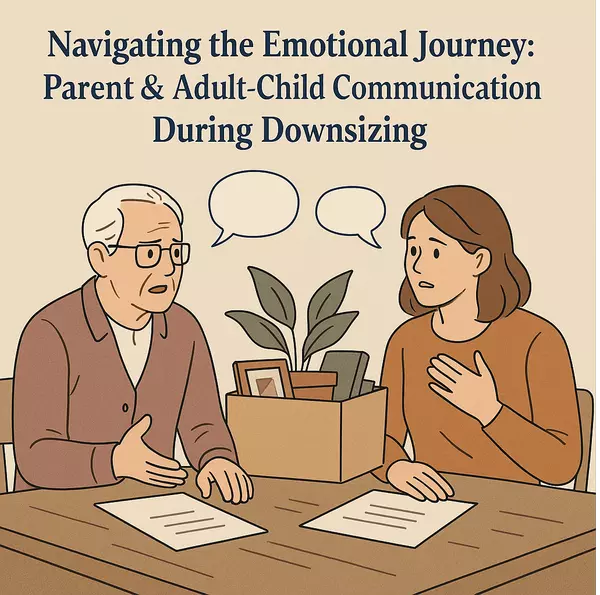
Navigating the Emotional Journey: Parent & Adult-Child Communication During Downsizing
When families begin to talk about downsizing, the first conversations usually focus on logistics — how many boxes, which moving company, where to live next. But anyone who's walked through this process knows the harder part isn't physical at all. It's emotional.
I know this not just from my work as a Certified Real Estate Planner and Senior Relocation Specialist, but from my own family's journey. My mom has Parkinson's, and my dad has been her tireless caregiver for years.
We've had many conversations about what comes next — whether to bring in help, move to a senior-friendly community, or make their home safer. These talks aren't easy. They stir up memories, fears, and even disagreements. But they're also full of love.
The truth is, downsizing is about more than square footage. It's about identity, independence, and relationships. When parents and adult children navigate this together with care, the process becomes not just a move, but a chance to grow closer.
Why Downsizing Feels So Emotional
For seniors, a home is more than walls and windows. It's:
- • The place where they raised children
- • A storehouse of memories — holidays, birthdays, daily routines
- • A symbol of independence and accomplishment
Letting go of that can feel like losing a piece of themselves.
For adult children, the emotions are different but just as powerful:
- • Worry about safety
- • Desire to help but fear of overstepping
- • Guilt about encouraging a move that feels hard for their parents
Remember
These emotions are natural. Acknowledging them openly is the first step toward healthier communication.
The Most Common Parent–Child Conflicts
When I sit down with families, I often see the same sticking points come up again and again:
Timing
Parents may feel pressured, while children may feel urgency about safety.
What to keep vs. what to let go
Objects hold meaning that isn't always obvious to others.
Control
Parents want to make their own decisions. Children want to feel reassured that things will get done.
💙 Important Truth
These conflicts don't mean families are failing. They simply mean this is hard — because it matters.
Tips for Gentle, Constructive Conversations
Here are some approaches I've seen work well for both seniors and adult children:
Listen first
Instead of starting with solutions, ask open questions: "What matters most to you about staying here?" or "What would make life feel easier?"
Share your perspective with love
Instead of "You can't live here anymore," try "I worry about you being alone on the stairs. I want you safe."
Look for shared goals
Most families want the same thing — comfort, safety, and connection. Naming that shared goal helps everyone feel aligned.
Take breaks
Downsizing talks can feel overwhelming. It's okay to pause and revisit later.
Bring in a neutral guide
Sometimes a professional — whether a planner like me, a senior move manager, or even a counselor — can ease tensions and keep the process moving gently.
The Power of Sharing Stories
One of the most healing things families can do is share stories while sorting through belongings. Instead of arguing about whether to keep or toss something, pause and ask about its meaning.
That quilt in the attic? It might remind mom of nights rocking her babies.
That set of tools in the garage? It might represent years of building and fixing for the family.
Taking a moment to honor those stories makes letting go less painful. It turns decluttering into storytelling — a way to pass on history even if the object itself doesn't stay.
When It Helps to Bring in Support
Sometimes, even with the best intentions, emotions run high. That's when bringing in outside support can make all the difference:
Professional Guidance
A Certified Real Estate Planner or Senior Relocation Specialist to guide the practical steps.
Legal Support
An estate planning attorney to answer questions about wills and inheritance.
Emotional Support
A counselor or support group to help family members process emotions.
Having a trusted professional in the mix can reduce tension between parents and adult children, because no one feels they're carrying the whole burden alone.
A Real-Life Example
A few months ago, I worked with a family in Nassau County. The adult children were urging their mom to sell her longtime home because of the stairs. She resisted, saying she wasn't ready.
We slowed the process down. Instead of starting with "sell now," we focused on smaller changes — clearing out unused rooms, adding safety features, and visiting a few 55+ communities together.
By shifting the conversation from pressure to partnership, the family built trust. Within six months, the mom chose to move — on her terms.
Today she's in a smaller, safer home, and her kids feel relieved knowing she's comfortable.
Final Thoughts
Downsizing is rarely just about space. It's about the bonds between parents and children, and how those bonds are tested and strengthened during life's big transitions. The process can be tender, frustrating, and emotional — but with patience, it can also be deeply meaningful.
In my own family, I've seen how hard these conversations can be. But I've also seen how they create opportunities for honesty, closeness, and love. That's why I approach every family I work with not just as a real estate professional, but as someone who truly understands how personal this is.
Let's Navigate This Journey Together
If you and your family are beginning to talk about downsizing, I'd love to help guide those conversations. As a Certified Real Estate Planner and Senior Relocation Specialist — and as a son walking through this with my own parents — I bring both professional expertise and personal empathy to the table.
Let's take this journey together — gently, thoughtfully, and with care for everyone involved.
Categories
Recent Posts